


Digital marketing is transforming how businesses interact and connect with customers through AI. Machine learning and intelligent algorithms are helping companies create smarter, faster and measurable campaigns.
It is not hype or flashy technology. It concerns actual systems that have insights, reduce wasted energy, and enhance outcomes.
What Is Digital Marketing Today?
When the question arises as to what is digital marketing today, everything that occurs online to reach the customer is the answer. It includes search tools, social media, email, display advertising, and any other digital point of connection between a brand and a buyer.
It is not only a question of promoting products. It involves developing relationships, generating leads and ensuring that customers are kept interested.
Digital Marketing in the UK has taken a different twist. The messages that people want to receive are those that are personal and helpful. This is not the case with generic campaigns.
Businesses seeking digital growth are increasing their investment in systems capable of analysing behaviour and sending suitable messages automatically.
What AI Brings to Digital Marketing
The Role of AI in Digital Marketing
The use of AI in digital marketing is no sham. It smarts up the campaigns in some significant ways.
Personalisation at Scale
You can also use AI to wade through big volumes of customer data and send messages that are actually relevant to an individual. This can be done via email, on websites and in advertisements.
It examines shopping behaviours, purchasing history, and demographics. What comes out is personalised, not robotic content. Conventional segmentation cannot maintain this scale.
Predictive Analytics in Digital Marketing
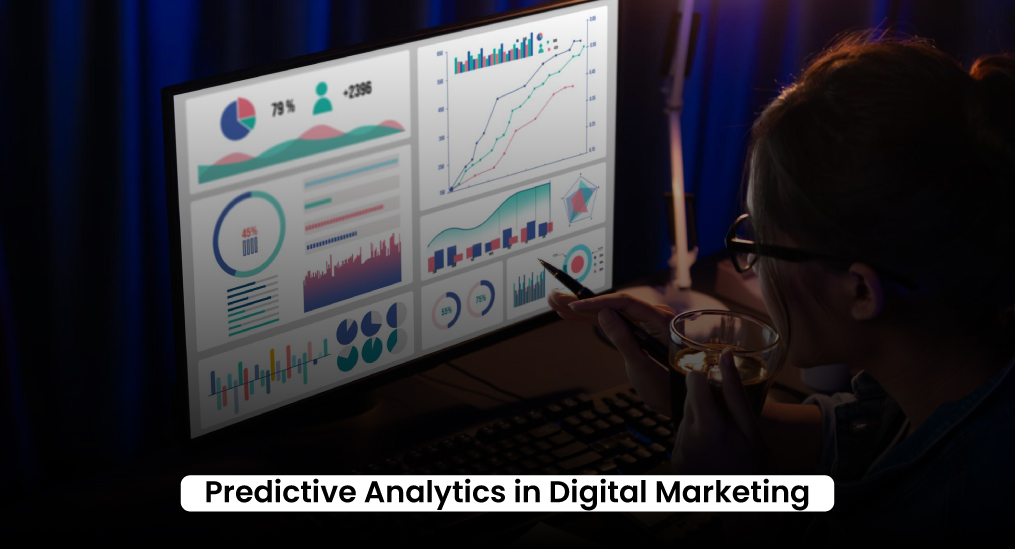
Artificial intelligence has the ability to identify trends in previous behaviour and make an educated guess about what will happen next with a customer. This assists brands in determining who will purchase, when to conduct a campaign, and how best to utilise their funds wisely. Predictive analytics provide explicit understanding of what will work even before the commencement of the campaign.
Automation and Smart Optimisation
Repetitive functions such as bid change, content rotation, or A/B testing can be performed by AI. The system monitors the real-time results and automatically modifies campaigns. This is liberating teams to work on strategy and leaves the AI to work on optimisation. This is more accurate and fast as compared to manual work.
AI Digital Marketing in the UK Market
In the UK, AI digital marketing is commonly associated with CRM systems and analytics tools. AI helps brands to bridge the gap between customer data and personalised campaigns via email, apps, and sites. It is an all-inclusive ecosystem in which information generates actions.
The cross-channel tracking is also facilitated by AI. It demonstrates the performance of campaigns on the search, social, and display. Systems identify areas that are performing poorly and propose rearrangements. This is necessary in digital marketing services to maintain the effectiveness and measurability of the campaigns.
How AI Is Changing SEO in Digital Marketing
SEO is a substantial component of online marketing, and AI is transforming the marketing process. AI-driven tools are able to examine the search intent, identify new keywords and optimise content structure more quickly than humans do. They also have the ability to monitor the user behaviour and optimise the pages to suit what people actually desire.
When comparing the differences between ai seo and traditional seo, the difference is evident. The old-fashioned SEO relies on individuals checking trends and setting them manually. AI is able to identify trends in large volumes of data and anticipate changes in algorithms. That provides UK companies with a tangible advantage in search visibility.
AI and Campaign Automation in Digital Marketing
AI digital marketing also improves campaign automation and customer interaction. It manages bid changes, rotates creatives, and schedules content without manual input. AI chatbots can handle questions instantly, giving customers personalised responses at any hour.
A digital marketing agency in UK uses AI to connect these systems seamlessly. Campaign planning, execution, and analytics all talk to each other. The result is a strategy that runs smoothly while providing measurable results.
Real-World Applications
Some practical ways AI is applied include:
- Email and Content Personalisation: AI decides which content each user sees based on behaviour.
- Dynamic Pricing and Offers: Online shops adjust prices and promotions automatically depending on demand and stock.
- Audience Segmentation: AI finds small, high-value groups for more targeted campaigns.
- Performance Forecasting: Marketers can predict campaign outcomes and adjust plans before launch.
Brands focused on digital growth are investing in these systems to keep up. AI makes campaigns smarter, scalable, and easier to track.
Traditional Digital Marketing vs AI-Driven Digital Marketing

Old-school digital marketing is linear. You plan campaigns, launch them, and check results manually. AI-driven marketing constantly learns and adjusts.
For example, social media bids used to be changed weekly based on reports. AI updates them in real time, reacting to engagement and competition. That saves time, reduces errors, and keeps spend aligned with results.
Content creation works the same way. AI can suggest copy, images, and layouts based on data, while traditional teams rely on guesswork and A/B testing. AI keeps improving campaigns without draining human resources.
Measuring Digital Marketing Performance with AI
AI makes it much easier to track ROI. It gathers data across all channels and presents clear dashboards showing spend, engagement, and conversions.
Predictive analytics help marketers plan ahead instead of reacting after the fact. For smart digital solutions, this means every pound spent is more accountable. Budgets can be adjusted quickly based on real-time performance.
Integrating AI with CRM, Apps, and E-Commerce
Marketing today is more than campaigns. AI can link CRM & Mobile App platforms with digital marketing, so every interaction informs your strategy.
For online shops, e-commerce development can use AI to recommend products, optimise inventory, and adjust pricing dynamically. For boosting products, companies must invest in e-commerce development UK brands need to let AI recommend products, manage inventory, and adjust pricing automatically.
Smart Websites give these capabilities more power. Smart Websites vs Traditional Websites shows why AI-ready platforms perform better. Adaptive content, predictive search, and automated scoring are all baked in, unlike legacy sites.
Branding and Marketplace Impact
AI also improves branding. It monitors sentiment, engagement, and performance, making campaigns more responsive. For sellers on Amazon, Amazon Services can use AI to optimise listings, pricing, and advertising. It is not just automation; it informs commercial decisions and aligns messaging with real results.
Adapting to the UK Market
The UK businesses that use AI as a digital marketing tool must pay attention to the quality of data, system integration, and expertise in the team. It is an aim of a scalable, digital growth UK brands can count on. AI is most effective as an element of a long-term performance monitoring strategy, which complies with regulations (such as GDPR) and aligns online and offline actions.
What To Expect In The Future?
In the UK, AI will have further influence on digital marketing. Predictive analytics and automated optimisation tools, as well as personalised campaigns, are becoming commonplace.
With a smart use of AI, companies can target more effectively, optimise more quickly and measure ROI more accurately. The integration of automation and human control will guarantee sustainable growth driven by performance enhancement instead of single campaign victories.
Bringing It All Together
Digital marketing through AI is shifting brands from a reactive model to an automated data-based model. With AI in place, SEO, personalisation, campaign management, and analytics all get better.
Businesses can actually gain an edge by using platforms that bridge information, boost effectiveness, and expand their reach comfortably. The trick is to find a balance between AI insights and a human strategy. Responding appropriately, AI can make campaigns smarter, measure more precisely, and growth more predictable.
In the UK, AI digital marketing is not a fad. It is a tangible, quantifiable methodology that enhances interactions, productivity, and development. Companies that implement AI systems today are positioning themselves to have smarter campaigns, higher ROI, and an increasing market. As explored in our article, How Artificial Intelligence (AI) Will Transform Your Digital Marketing in 2025, AI is already reshaping how brands approach digital marketing strategy, automation, and performance measurement across the UK market.


