

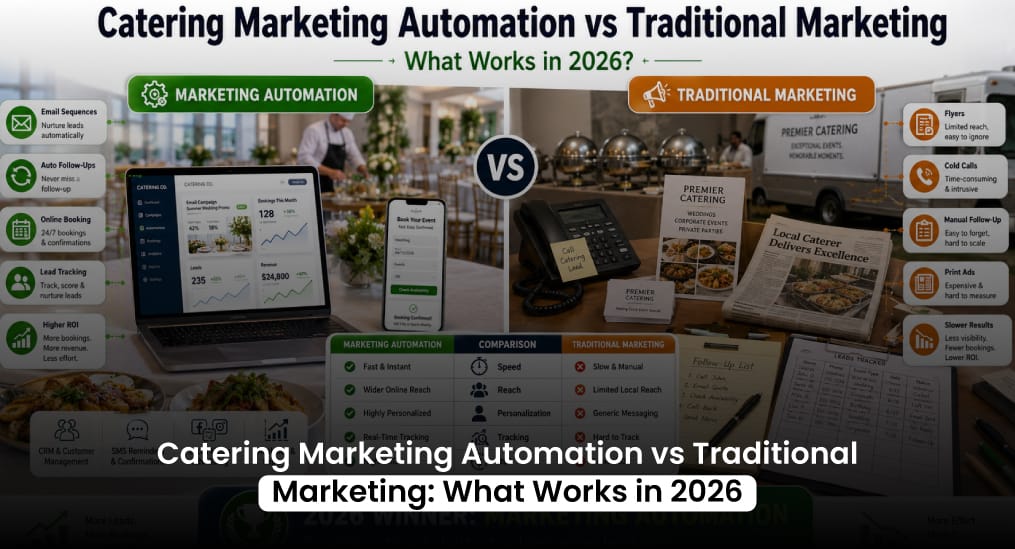
Catering Marketing Automation vs Traditional Marketing is becoming one of the biggest discussions for catering businesses looking to grow in 2026. While traditional marketing relies on referrals, networking, and local reputation to attract clients, marketing automation helps businesses capture leads, respond instantly, and maintain consistent follow-ups. Understanding the strengths of both approaches can help catering companies build a more reliable and scalable marketing strategy.
Many catering owners still invest most of their time posting photos, boosting social media content, and trying to stay visible online. However, visibility alone does not always translate into booked events.
In 2026, successful caterers are shifting toward systems that automatically capture demand and streamline lead management. They are focusing less on vanity metrics and more on response speed, lead handling, and follow-up consistency.
That shift matters because catering buyers often contact multiple vendors at the same time. The business that responds clearly, quickly, and professionally is often the one that secures the booking.
Why Traditional Promotion Still Feels Familiar
Most catering owners built their businesses through referrals, event networking, and local reputation.
Those methods still matter today.
Word of mouth remains one of the strongest drivers of booked events in the food service industry.
Traditional outreach usually includes:
- Printed menus handed out during local events and vendor fairs
- Referral partnerships with planners, venues, and photographers nearby
- Community sponsorships tied to schools, charities, and local festivals
- Seasonal promotions sent through postcards or neighborhood mailers
- Booth setups at wedding expos and regional business networking events
- Repeat client discounts shared during direct customer conversations
These methods create trust because they involve real relationships. That is especially important for weddings, corporate events, and private celebrations where buyers want reliability.
Still, many of these methods are difficult to track. A catering owner may spend thousands on events and promotions without knowing which activity produced actual bookings.
catering companies
That lack of visibility is one reason many operators are rethinking their approach to growth in 2026.
The Real Problem With Social Media Dependence
Many caterers assume strong visibility automatically leads to consistent revenue. In reality, social platforms mostly reward engagement, not purchase intent.
A viral food video can attract thousands of views while producing very few qualified inquiries.
That disconnect has become more obvious over the past two years. Organic reach continues to drop across major platforms, while paid advertising costs continue rising for local businesses.
The issue is not social media itself. The issue is relying on it as the primary lead source.
Several industry studies now show that catering buyers often make decisions based on:
- Fast response times after submitting an inquiry or booking request
- Clear pricing information that reduces early customer confusion online
- Organized follow-up messages sent within the first business day window
- Mobile-friendly inquiry forms that work smoothly during busy schedules
- Trust signals like reviews, testimonials, and event photo consistency
- Easy communication options that remove delays during planning stages
Most of those factors happen after attention is captured.
That is where many operators discover weaknesses in their current catering marketing process.
How Buyer Behavior Changed After 2024
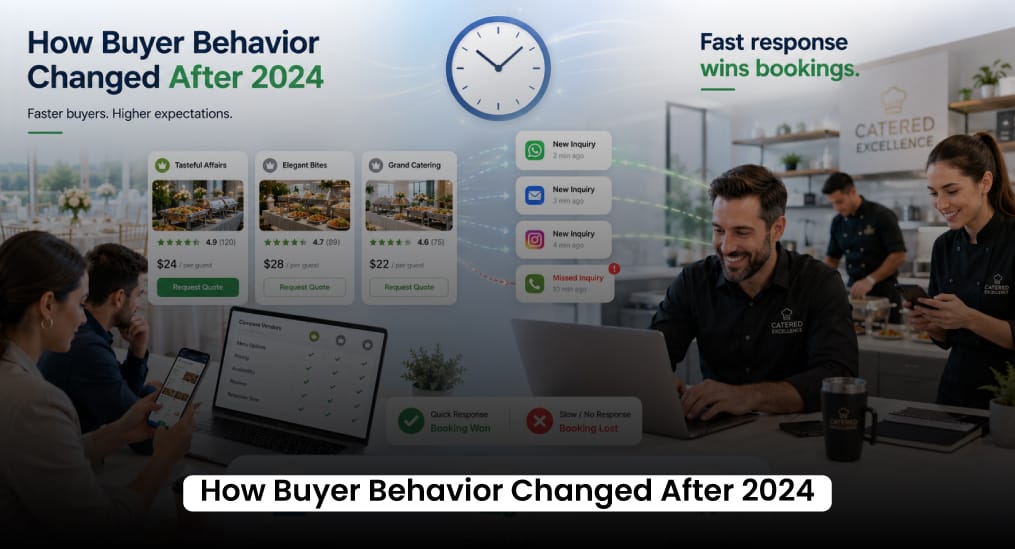
Event buyers became more selective after years of economic uncertainty and rising event costs.
Customers now compare vendors faster. They expect quick answers. They often request quotes from several businesses at the same time.
For catering owners, this creates operational pressure.
A missed inquiry on Friday afternoon can easily become a lost booking by Saturday morning.
This shift explains why more operators are investing in workflow systems instead of relying only on catering social media marketing.
The businesses performing well in 2026 are usually doing three things consistently:
- Capturing inquiries immediately
- Qualifying leads before manual follow-up
- Maintaining communication automatically
That process removes delays that commonly hurt smaller catering teams.
What Catering Owners Mean by Automation Today
Automation no longer means replacing staff or removing personal communication.
In catering operations, automation usually refers to systems that handle repetitive tasks without requiring constant manual input.
That can include:
- Instant inquiry replies after forms are submitted through the website
- Lead routing systems based on event type or estimated guest count
- Follow-up reminders sent automatically before proposal deadlines arrive
- Calendar coordination that reduces scheduling conflicts across staff teams
- Quote tracking dashboards showing which inquiries still need responses
- Automated reminders for tastings, deposits, and contract completion tasks
These systems matter because most catering teams are already stretched thin during peak seasons.
Owners spend large portions of the week managing kitchens, staffing issues, deliveries, rentals, and customer communication simultaneously.
As a result, many leads simply fall through operational gaps.
That operational issue is becoming central to every modern catering marketing strategy discussion.
Catering Marketing Automation and the Shift Toward Booking Infrastructure
The biggest difference between older promotion methods and newer systems is infrastructure.
Traditional promotion focuses heavily on generating awareness.
Modern systems focus on handling demand correctly once it arrives.
That distinction matters more than many businesses realize.
For example, a catering company may receive 40 inquiries per month. If response delays, missed emails, or inconsistent follow-up reduce conversions by even 20%, the revenue loss becomes significant over a full year.
This is where companies like KoretechX position systems such as Korepulse AI differently from typical agency campaigns.
Korepulse AI is designed as a workflow and booking intelligence system. Its role is to help caterers capture inquiries, organize responses, and qualify leads automatically before staff spend time manually sorting requests.
The emphasis stays on operational consistency rather than online popularity.
That practical focus is why more owners are researching catering marketing automation for increased bookings instead of chasing higher follower counts.
Why Traditional Methods Still Matter
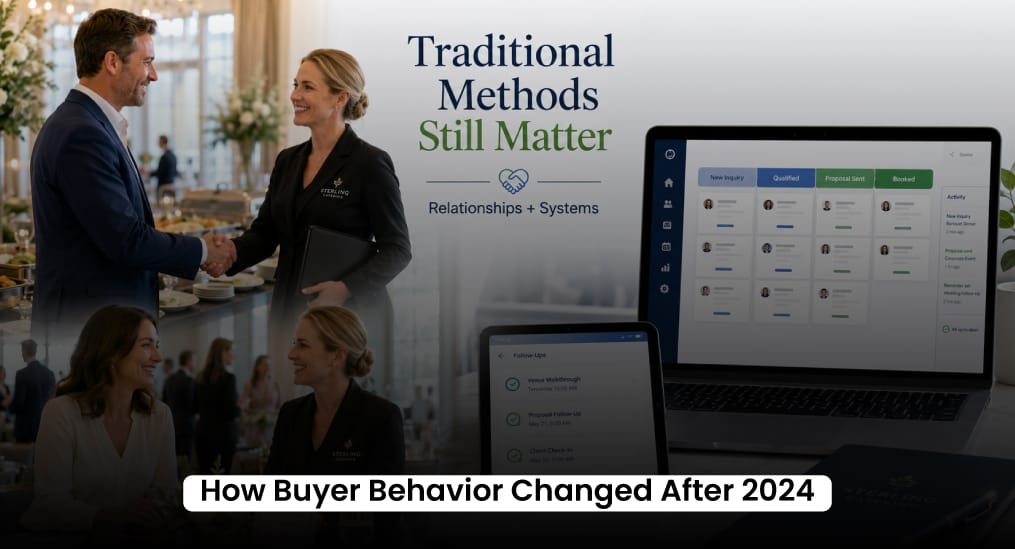
Automation does not replace relationship-driven business development.
Referrals still close deals.
Venue partnerships still generate reliable leads.
Repeat clients still drive strong margins for many caterers.
The difference is that modern systems support those relationships instead of replacing them.
For example:
- Referral inquiries can enter organized pipelines instead of being scattered in inboxes
- Repeat customers can receive faster responses during peak booking periods
- Wedding inquiries can move through standardized qualification workflows quickly
- Corporate catering requests can route automatically to the right staff member
- Follow-up communication can continue even during busy production schedules
- Event reminders can reduce last-minute confusion before service delivery days
This combination of human trust and organized systems is becoming more effective than purely manual outreach.
That balance is shaping modern marketing strategies for catering business operators across the United States.
What Smaller Catering Businesses Often Get Wrong
Many smaller operators believe they need more traffic when the real issue is conversion handling.
In practice, many catering websites already receive enough interest to generate more bookings.
The problem appears later in the process:
- Inquiry forms are too long
- Replies arrive too slowly
- Pricing information is unclear
- Follow-up stops after one message
- Event details get lost across platforms
- Staff communication stays disorganized
Those issues create silent revenue loss.
Owners then assume marketing failed when the real problem was operational follow-through.
That misunderstanding continues to affect both catering traditional marketing efforts and digital campaigns alike.
Why Data Matters More Than Reach
One of the biggest shifts in 2026 is the move toward measurable performance.
Catering owners increasingly want answers to practical questions:
- Which inquiry source produces the highest-value events?
- How quickly are staff responding to new requests?
- Which services generate repeat customers most often?
- What percentage of inquiries actually become booked events?
- Which months create the largest lead management bottlenecks internally?
- How many opportunities disappear because follow-up stops too early?
Traditional promotion methods rarely provide that visibility.
Automation systems make those patterns easier to identify.
That visibility helps operators improve staffing decisions, proposal timing, and event scheduling efficiency.
It also changes how businesses approach catering marketing pricing, since owners can measure conversion performance more clearly.
The Businesses Growing Faster in 2026
The catering companies growing steadily in 2026 are usually not the loudest online brands.
Many are simply operationally efficient.
- They respond quickly.
- They qualify inquiries properly.
- They maintain organized communication.
- They reduce friction during the booking process.
- That operational discipline is becoming more valuable than constant online visibility.
Many owners are now exploring how to automate catering leads because consistent systems create stability during unpredictable event cycles.
At the same time, experienced operators still maintain referral relationships, venue partnerships, and local networking efforts that support long-term trust.
The strongest results usually come from combining both approaches.
That is why many businesses now treat Catering Marketing Automation as infrastructure rather than advertising.
What Works Best in 2026?
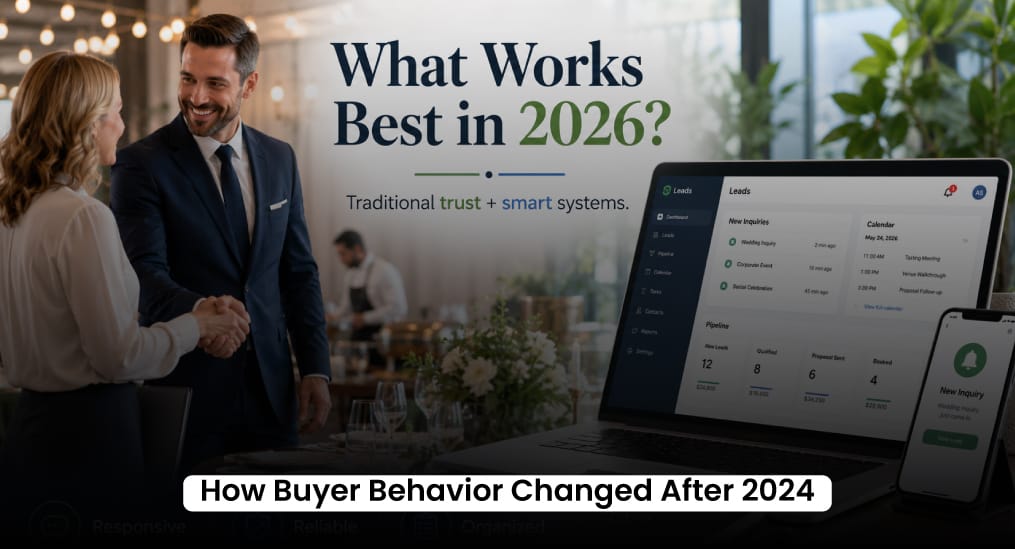
The debate between modern systems and traditional outreach is no longer about choosing one side.
Both still matter.
Traditional methods build trust.
Automation protects opportunities from being lost.
The businesses succeeding today are not necessarily posting more content or spending more on ads. They are creating smoother systems behind the scenes.
They understand that buyers care less about follower counts and more about responsiveness, clarity, and reliability.
That shift is changing the future of catering marketing across the United States.
At the same time, operators are refining their catering marketing strategy around measurable booking outcomes instead of surface-level engagement metrics.
Even long-standing catering traditional marketing tactics now work better when paired with organized lead handling systems.
The same trend is influencing broader marketing strategies for catering business owners who want predictable growth without increasing operational chaos.


