

Most catering businesses fail to automate catering leads, which results in missed follow-ups, slow responses, and lost bookings.
Leads often come from multiple places: website forms, Instagram DMs, and Google calls. Without a system, they sit unanswered or get lost between staff.
Many owners assume more posts bring more bookings. In reality, poor follow-up kills demand already in front of you.
The real issue is not lead generation. It is what happens after someone shows interest.
Why Catering Leads Fail Without Automation
Without structured catering automation, lead handling stays reactive. Businesses depend on manual effort instead of defined workflows, which leads to missed timing, poor tracking, and lost opportunities.
The problem is rarely volume. It is process. Many catering companies rely on memory, inboxes, or manual replies to manage inquiries.
Here is what typically breaks:
- Inquiries sit in personal inboxes without shared visibility
- Response times vary depending on staff availability
- No structured qualification before sending quotes
- Follow-ups depend on memory instead of triggers
- Pricing details are sent without context or filtering
- No tracking of which leads convert and why
This creates inconsistency. And inconsistency reduces trust.
The Cost of Not Automating Catering Leads
Without catering crm software, manual processes limit visibility. Teams cannot track conversations or measure response quality, which directly impacts conversion and repeat bookings.
Manual systems feel manageable at low volume. But as demand grows, gaps appear. This is where catering CRM systems start becoming necessary.
This is what happens when follow-ups are manual:
- Response time increases as inquiries stack up
- Leads compare vendors while waiting for replies
- Staff repeat the same answers across channels
- Important details are missed in conversations
- No record of past interactions for returning clients
- Conversion rates drop without a clear reason
Most caterers do not notice this decline immediately. It shows up as “low-quality leads” when the issue is actually a process failure, which can be improved by Automate Catering Leads.
What It Means to Automate Catering Leads
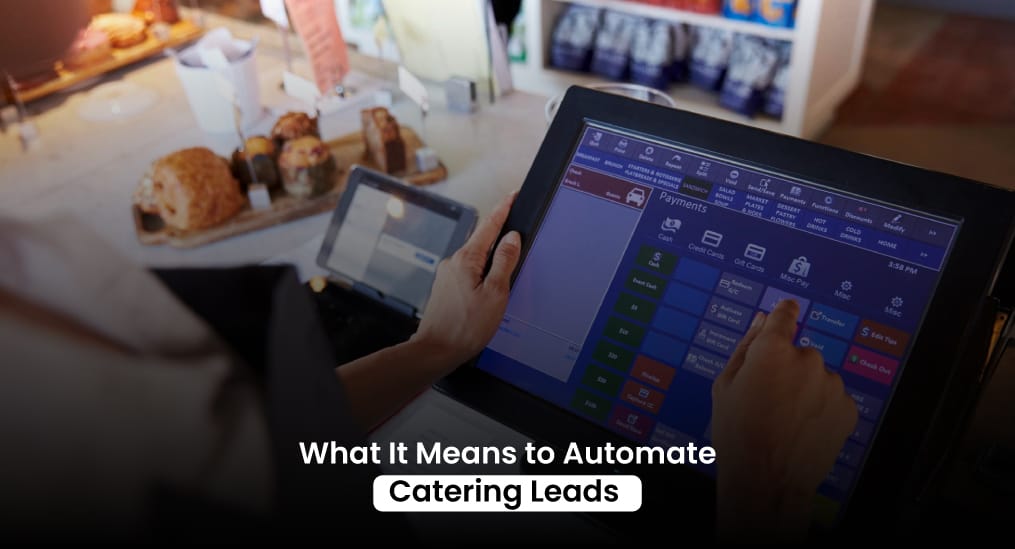
To automate catering leads workflows means removing dependence on human timing. Not removing human interaction.
With structured catering marketing automation, follow-ups happen based on behavior, not guesswork.
A simple system includes:
- Instant response when a form or message is received
- Pre-qualification questions before quoting
- Auto-tagging leads by event type or budget
- Timed follow-ups if no response is received
- Centralized conversation tracking across channels
- Notifications for high-intent inquiries
This is not complex technology. It is structured communication.
Effective catering automation ensures every inquiry enters a system, gets categorized, and moves through a defined journey. This removes reliance on human memory and improves consistency.
Where Traditional CRM Tools Fall Short
Many caterers adopt tools labeled as crm catering solutions, but still struggle. The issue is not the tool itself. It is how it is configured.
Without event-based customization, they create extra steps instead of simplifying workflows.
Most generic CRMs are built for sales pipelines, not event-based businesses. Catering has different needs:
- Events have fixed dates and deadlines
- Menus and pricing vary per inquiry
- Guest count affects operational planning
- Follow-ups are time-sensitive, not optional
- Multiple stakeholders are often involved
Without customization, even good tools create friction.
Building a System That Captures and Converts Demand
Catering automation works best when every stage is mapped. From inquiry to booking, each step must be predictable, measurable, and repeatable.
A working system focuses on flow, not features. With catering automation, the goal is to guide each lead from inquiry to booking without manual chasing.
A structured workflow looks like this:
- Inquiry captured from all channels into one system
- Immediate acknowledgment sent to the client
- Lead qualification through short automated questions
- Segmentation based on budget, event type, and timeline
- Follow-up reminders triggered automatically
- Final booking confirmation tracked and stored
This removes uncertainty. Every lead follows a defined path.
Why Social Media Alone Cannot Solve This
Many caterers invest heavily in catering social media marketing. It brings visibility, but not structure.
More followers do not fix:
- Missed inquiries in DMs
- Delayed responses during peak hours
- Lack of follow-up after initial contact
- No filtering of low-intent leads
- Disorganized communication across platforms
Social media creates attention. Systems convert it.
Even with strong visibility, businesses cannot manage or convert incoming demand effectively without catering CRM software. Attention without structure leads to leakage, and Automate Catering Leads becomes essential to ensure every inquiry is captured and followed up properly.
How Catering CRM Software Supports Lead Automation
A properly configured catering CRM software ensures operational continuity. It allows teams to collaborate, track, and respond without delays or confusion. It connects inquiries, conversations, and decisions in one place.
This matters because:
- Staff turnover does not disrupt the communication history
- Multiple team members can manage the same lead
- Data shows which channels bring real bookings
- Follow-ups are not dependent on individuals
- Client preferences are stored for future events
- Reporting becomes accurate and actionable
Without this structure, growth creates chaos.
What Makes the Best CRM for Catering Business
Choosing the best CRM for catering business is less about features and more about fit. The system must align with how catering operations actually work.
Key criteria include:
- Ability to handle event-based timelines
- Custom fields for menus, guests, and venues
- Automated follow-ups based on time or behavior
- Integration with website forms and messaging channels
- Clear pipeline view from inquiry to booking
- Simple interface for non-technical staff
Tools that meet these needs reduce manual effort significantly.
Where Korepulse AI Fits in This Process
Most systems stop at tracking. Korepulse AI focuses on action. It operates as an automation-driven booking and intelligence layer.
Companies often use catering marketing automation for increased bookings. But it also helps to:
- Capture inquiries from multiple channels instantly
- Qualify leads before staff engagement
- Trigger structured follow-ups automatically
- Identify high-intent leads based on behavior
- Reduce response time without increasing workload
- Maintain consistent communication across all touchpoints
It does not replace human interaction. It organizes it.
When to Automate Catering Lead Processes
At scale, catering automation becomes essential. It ensures consistency across high inquiry volumes and prevents revenue loss due to operational delays.
Not every business needs full automation immediately. But certain signals indicate it is time to automate catering leads systems.
Watch for these signs:
- You miss inquiries during busy service hours
- Response times vary across platforms
- You rely on memory for follow-ups
- Leads ask repeated basic questions
- Conversion rates feel inconsistent
- You cannot track where bookings come from
At this stage, manual systems are already limiting growth.
How Automating Catering Leads Improves Pricing Decisions
With catering CRM software, pricing decisions become data-driven. Businesses can identify patterns in demand, budgets, and conversion behavior.
Disorganized follow-ups distort catering marketing pricing decisions. Without clear data, pricing feels like guesswork.
Automation provides:
- Visibility into which price ranges convert
- Insight into client budgets and expectations
- Data on event types and demand patterns
- Clarity on profitable vs low-margin bookings
- Evidence to adjust packages confidently
- Reduced reliance on discounting to close deals
- Better data leads to better pricing decisions.
Why Automating Catering Leads Increases Bookings
Most catering businesses do not have a lead problem. They have a system problem.
Automation is not about replacing people. It is about removing gaps.
When every inquiry is captured, qualified, and followed up consistently with Automate Catering Leads, bookings become predictable.
The shift is simple. Move from reactive communication to structured workflows.
That is where real growth begins, as outlined in 10 Ways to Generate Leads for Catering Businesses.


