


If you are asking what is crm, you are likely feeling the strain of managing leads, customers, and follow-ups across too many tools. Spreadsheets, email threads, sticky notes, and disconnected software can only carry a growing business so far. At some point, visibility breaks down, communication slips, and revenue opportunities get missed.
For small to mid-sized US businesses, that tipping point often comes faster than expected. As marketing expands across channels and sales cycles become more complex, companies need a centralized way to manage relationships. That is where a CRM becomes not just helpful, but essential.
What Is CRM in Business?
At its core, what is crm in business? It stands for Customer Relationship Management. In practical terms, it is a structured system for tracking every interaction you have with prospects and customers, from first website visit to signed contract to ongoing support.
A CRM replaces scattered notes and memory-based processes with a shared source of truth. It records contact details, communication history, deal stages, tasks, and customer preferences in one organized platform. Instead of asking your team to “remember to follow up,” the system tracks and prompts those actions automatically.
For founders and operations managers, this creates clarity. For sales and marketing teams, it creates consistency. For leadership, it creates measurable visibility into pipeline and revenue performance.
What Is CRM System and How Does It Work?
When people search for what is crm system, they are usually trying to understand whether it is just a database or something more dynamic. A modern CRM system is both a database and an operational engine.
It stores contact information, but it also tracks sales pipelines, automates follow-ups, assigns tasks, logs calls and emails, and generates reports. Most systems integrate with your email, website forms, marketing platforms, and even accounting tools.
Here is how it works in a typical business:
- A prospect fills out a form on your website.
- Their information automatically enters the CRM.
- The system assigns the lead to a sales rep.
- Follow-up emails are scheduled.
- Every call, note, and proposal is tracked.
- Management can see the deal status in real time.
This level of structure eliminates guesswork. It also creates accountability across teams.
As a Digital Agency focused on ai-driven digital solutions, Koretechx often sees businesses operating with powerful marketing but weak internal tracking. A CRM bridges that gap by connecting customer acquisition to customer management.
What Does CRM Do for a Business?
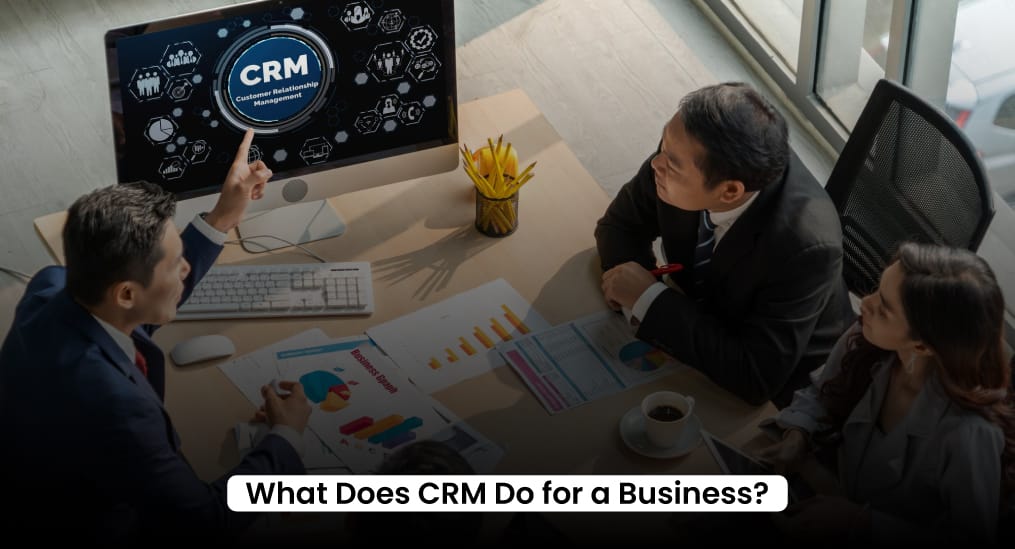
If you are evaluating systems, you are probably asking what does crm do for a business beyond just storing contacts. The answer is simple: it improves how revenue is generated, tracked, and retained.
For sales teams, a CRM:
- Organizes leads and opportunities
- Tracks deal stages
- Automates reminders and follow-ups
- Provides pipeline forecasting
For marketing teams, it:
- Connects campaigns to actual revenue
- Segments audiences
- Tracks engagement behavior
- Supports personalized communication
For customer service, it:
- Centralizes support tickets
- Tracks past issues
- Improves response time
- Prevents repeat mistakes
For leadership, it:
- Delivers reporting dashboards
- Highlights bottlenecks
- Reveals growth patterns
- Improves decision-making
Without a CRM, many businesses rely on spreadsheets. Spreadsheets can track data, but they do not automate tasks, integrate with other systems, or provide real-time collaboration. They also rely heavily on manual updates, which introduces errors.
What is CRM vs. Disconnected Tools
Most small businesses start with separate tools. Email marketing software. A project management app. A spreadsheet for sales tracking. Maybe a contact list in Outlook.
Individually, each tool works. Collectively, they create fragmentation.
Information lives in silos. Marketing cannot see which leads closed. Sales cannot see what emails were sent. Support has no context for past conversations. Leaders have to manually compile reports.
A CRM consolidates these data streams into one operational framework. When paired with AI and automation, the system becomes even more powerful. Tasks trigger automatically. Leads are scored based on behavior. Notifications route instantly to the right team member.
This shift moves your business from reactive to proactive.
How to Use CRM Practically?
Many businesses invest in a platform but struggle with how to use crm effectively. Technology alone does not fix broken processes. It amplifies whatever structure you build into it.
Here is a practical framework for implementation:
- Define your pipeline stages clearly. Avoid vague labels. Each stage should reflect a real milestone.
- Standardize data entry. Decide what fields are required and why.
- Automate repetitive tasks. Follow-ups, reminders, and internal notifications should not rely on memory.
- Connect your website and marketing channels. Forms and campaigns should feed directly into the CRM.
- Review reports weekly. A CRM is only valuable if leadership uses the insights.
For example, if you are exploring what is a smart website, understand that a smart site does more than display information. It integrates with your CRM, captures user behavior, and triggers automated workflows.
Why CRM Matters More Today Than Ever?

Customers are not patient anymore. They expect a quick reply, messages that feel relevant, and follow-up that does not fall through the cracks. If your team takes too long to respond or sends generic emails, people move on. It is that simple.
And let’s be honest, competition is tighter than ever across the US. Whether you run a service firm, a healthcare practice, a manufacturing company, or an online store, your prospects are comparing you to someone else. They have options. If working with you feels slow or disorganized, they will choose the business that feels easier.
What is CRM Gives you Control where it Matters
- You respond faster because new leads are routed instantly.
- You track more opportunities without losing visibility.
- You personalize outreach without manually rewriting every message.
- You stay in touch after the sale instead of disappearing.
That structure changes how your business feels to a customer. It feels attentive. It feels reliable.
Modern platforms are also identifying what is conversational ai and integrating it with customer engagement. Instead of waiting for someone to fill out a long form, chat tools can answer basic questions on the spot, qualify the lead, and send clean data straight into your CRM. Your sales team steps in already informed. They are not chasing details. They are having real conversations and moving deals forward.
How to Build a Custom CRM?
Not every business needs a fully customized platform. Many off-the-shelf solutions work well for standard sales cycles. However, there are times when companies begin researching how to build a custom crm.
Consider customization if:
- Your workflows are highly specialized
- You operate across multiple business models
- You require deep integration with proprietary systems
- Compliance requirements demand specific data controls
A custom CRM can be tailored to unique processes, but it requires strategic planning. Building one without clear documentation often leads to complexity instead of clarity.
Signs Your Business Needs a CRM Now
If you are still unsure what is crm and whether it applies to your company, look at your current operations.
You likely need a CRM if:
- Leads go uncontacted for days
- Sales forecasting feels like guesswork
- Customer information is scattered
- Reporting requires manual data collection
- Follow-ups depend on memory
- Teams duplicate effort
Growth exposes operational weaknesses. The more inquiries you receive, the more deals you manage, and the more customers you serve, the more strain fragmented systems create.
Get your CRM Today!
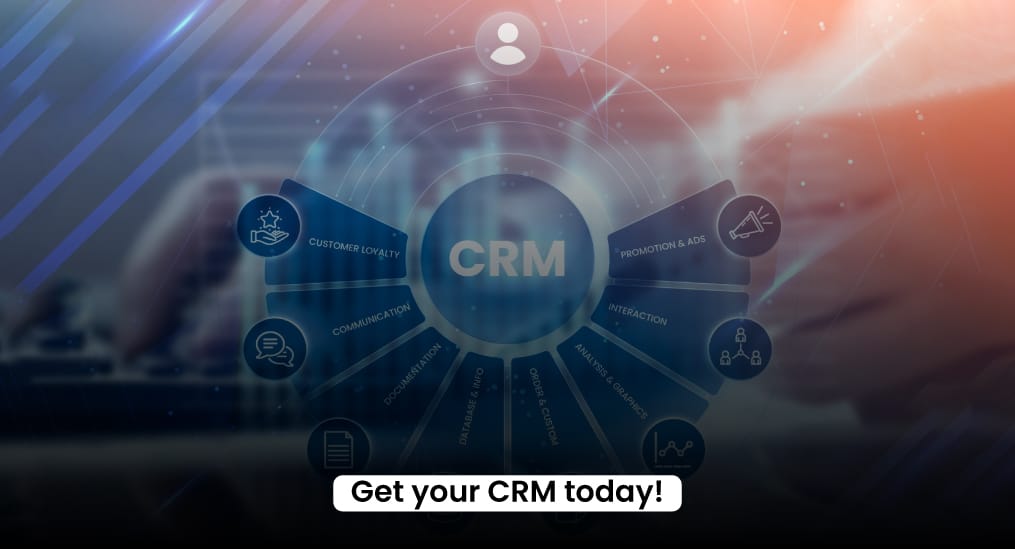
KORETCHx is your AI-powered Digital Agency, CRM strategy is integrated with smart websites, performance marketing, and intelligent automation. Instead of layering tools randomly, systems are designed to work together.
For example:
- Website forms feed directly into the CRM.
- Email campaigns are triggered based on lifecycle stage.
- Sales notifications fire automatically.
- AI tools analyze customer behavior.
- Reporting dashboards reflect real-time activity.
When combined with strategy, AI, and disciplined execution, it becomes one of the most valuable operational assets your business can implement today. If you want a deeper understanding of how modern systems drive measurable results, explore how CRM software transforms customer relationships into business growth and why it has become essential for scaling companies.


