


The car dealership marketing automation is not about making things easier. It is about staying in business in a market where customers do their research, compare options and make decisions before they even talk to a business.
Many rental operators are still doing things the old way. They have campaigns all over the place, but they do not follow up with customers consistently, and they still do manual bookings. The result is what you would expect. They miss out on inquiries, they do not get bookings and their revenue is not stable.
The problem is not just that people can not find them. They do not have a system in place to catch interested people and turn that interest into bookings. Businesses that spend money on car rental marketing often get more people visiting their website. Without automation, those visitors do not usually turn into regular customers.
This blog is a breakdown of where most car dealerships marketing automation are going wrong and how automation can make a difference.
Why Traditional Dealership Marketing Fails
Most operators are trying to do many things at once without a plan. They pay for ads they try to get listed in search results. They use social media. All of these things are separate, and they do not work together. There is no system in place to catch leads, check if they are serious and keep in touch with them.
This is where car dealership Google Ads campaigns should be doing well. They get people to click on them. Without a good system to follow up on those people just disappear. They look at options, leave and book elsewhere.
The problem is with the way things are set up. Old marketing methods just try to get people’s attention. New systems focus on what people want and try to get them to book.
What Happens Without a System?
Without automation, the customer journey falls apart in places:
- Delayed response to inquiries
- No way to check if leads are
- Manual follow-ups that rarely happen on time
- No way to know if people want to book
Each of these gaps makes it less likely that people will book. Over time, this adds up to lost revenue. Car dealership marketing automation can fix these problems.
Car rental marketing needs to be done in a way that catches people who’re interested and turns that interest into bookings. Without automation, car dealerships will struggle to get bookings.
What Is Automotive Sales Automation and Why Does It Matter?
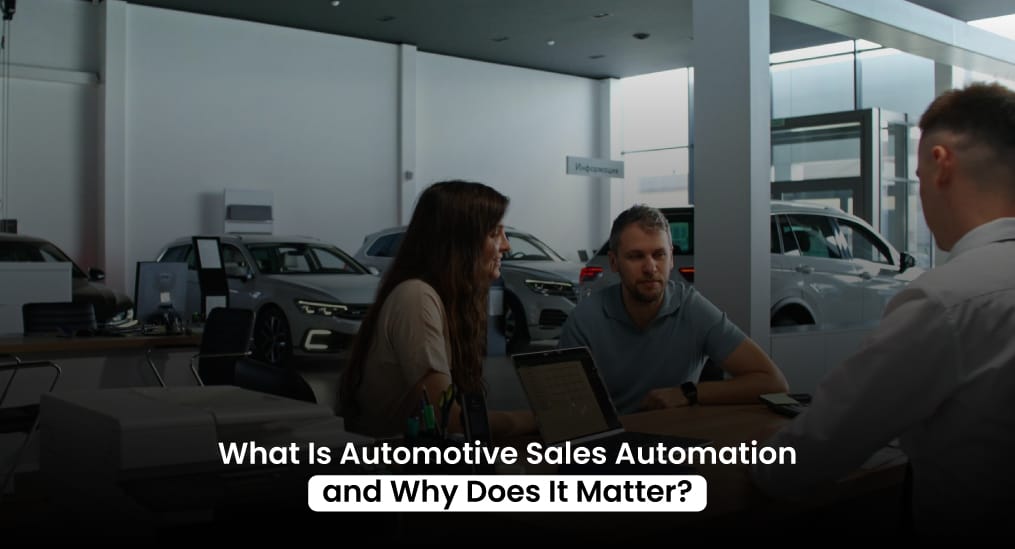
At its core, car dealership marketing automation replaces manual processes with structured workflows. It ensures that every inquiry is captured, assessed, and followed up on without delay.
Businesses evaluating automotive marketing automation often assume it is limited to email sequences or CRM tools. In reality, effective automation connects multiple touchpoints into a single system.
Key Features of Automotive Marketing Automation Systems
- Instant lead capture from search, ads, and listings
- Automated qualification based on customer intent
- Real-time response systems for inquiries
- Scheduled follow-ups across multiple channels
- Booking confirmation and tracking
These functions remove reliance on manual effort. More importantly, they ensure consistency across all customer interactions.
How Local Search Drives High-Intent Bookings?
Most rental customers search with clear intent. They look for availability, pricing, and proximity. If a business appears at the right time with the right information, the likelihood of conversion increases significantly.
However, ranking in local results is only part of the equation. Without systems in place, even high-intent traffic fails to convert.
Understanding automotive marketing pricing is often where businesses misallocate budgets. They invest heavily in visibility but neglect the systems needed to convert that visibility into bookings.
The Role of Intent-Based Visibility
Intent-based visibility focuses on capturing users who are ready to act. These are not casual browsers. They are searching for:
- “Car rental near airport”
- “Same-day car hire”
- “Weekly rental deals”
car dealership marketing automation ensures that when these users engage, the response is immediate and relevant.
The Gap Between Lead Generation and Sales in Dealerships

Many dealerships generate leads but fail to convert them efficiently. This gap is rarely discussed but has a direct impact on revenue.
Dealership lead generation is often treated as the final goal. In reality, it is only the starting point. What matters is how those leads are handled.
Here are some common conversion failures:
- Leads sit unanswered for hours
- No structured follow-up sequence
- Lack of personalization in responses
- No tracking of customer intent
These issues create friction. Customers move to competitors who respond faster and more effectively.
Automation addresses each of these points by standardizing the process.
How Automation Creates a Predictable Sales System
Car dealership marketing automation introduces predictability into a process that is otherwise inconsistent. It ensures that every inquiry follows a defined path from initial contact to booking.
This is where systems like Korepulse AI operate differently. Instead of focusing on traffic or engagement metrics, they prioritize booking outcomes.
What are The Core Components of a Booking System?
1. Capture Layer
Collects inquiries from search results, ads, and listings
2. Qualification Layer
Filters leads based on intent, urgency, and location
3. Engagement Layer
Responds instantly with relevant information
4. Conversion Layer
Guides the customer toward completing a booking
5. Follow-Up Layer
Re-engages leads that did not convert initially
Each layer works together. Removing one weakens the entire system.
Why Speed and Follow-Ups Matter in Car Sales
In the rental industry, response time is critical. Customers often contact multiple businesses simultaneously. The first relevant response usually wins.
Manual systems cannot maintain this level of speed consistently. Automation ensures that:
- Responses are immediate
- Information is accurate
- Follow-ups happen without delay
This consistency builds trust and increases conversion rates.
The Role of Korepulse AI in Local Demand Capture
Korepulse AI is structured around capturing and converting local search demand. It is not designed as a marketing tool in the traditional sense. It functions as a booking intelligence system.
It focuses on:
- Identifying high-intent search traffic
- Automating inquiry handling
- Managing follow-up workflows
- Converting leads into confirmed bookings
This approach removes reliance on fragmented tools and replaces them with a unified system.
Moving From Campaigns to Systems
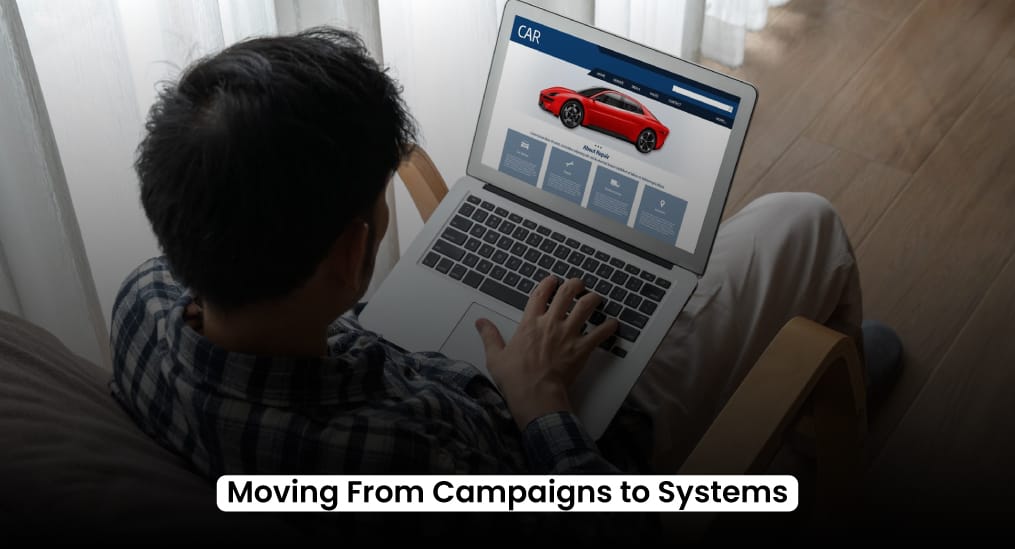
Most dealerships operate on a campaign mindset. They launch ads, monitor performance, and adjust budgets. This approach is reactive and often inconsistent.
Automation shifts the focus from campaigns to systems.
Key Differences
1. Campaign Approach
- Short-term focus
- Dependent on manual input
- Results fluctuate
2. System Approach
- Long-term consistency
- Automated processes
- Predictable outcomes
Businesses that transition to systems see more stable growth.
How Multi-Location Operators Benefit From Automation?
For businesses operating across multiple locations, the complexity increases.
Managing inquiries, availability, and pricing across regions becomes difficult. Automation centralizes these processes.
Benefits for Multi-Location Fleets
- Unified lead management across locations
- Location-specific responses
- Consistent customer experience
- Centralized performance tracking
This reduces operational overhead and improves efficiency.
Why Data Matters in Automotive Sales Automation?
Data provides visibility into what works and what does not. Without it, decision-making is based on assumptions.
Automotive sales automation systems collect and analyze data at every stage of the customer journey.
Key Metrics to Track
- Lead response time
- Conversion rate
- Booking completion rate
- Drop-off points in the funnel
These insights help refine processes and improve outcomes over time.
Common Myths About Marketing Automation
Some misconceptions prevent businesses from utilizing car dealership marketing automation effectively. These misconceptions usually come from assumptions rather than what actually happens when you implement car dealership marketing automation in real-world operations.
Automation does things that people think it does not do.
1. Misconception 1: Automation Replaces Human Interaction
This is not true. Automation actually helps people by doing tasks that are repeated over and over. This means teams can engage with customers and make sales.
2. Misconception 2: It Is Only for Large Businesses
This is also not true. Small businesses can benefit a lot from automation because it reduces the amount of work people have to do. It also helps when you do not have a lot of staff or resources.
3. Misconception 3: It Is Complex to Implement
New automation systems are made to work with the systems you already have. The problem is not the automation itself. It is when you set it up in a way.
4. Misconception 4: Automation Reduces Personalization
This is the opposite of what happens. Automation helps make things more personal by using information about what customers want and when they want it.
5. Misconception 5: It Only Works for Online Bookings
Automation can help with the process of talking to customers not just when they book online. It can help with questions following up and when customers do things offline.
6. Misconception 6: Results Take Too Long to Show
If you set up automation in the right way you can start to see good results very quickly. You can respond to customers faster. Make more sales.
Knowing these things helps businesses make decisions.
The Long-Term Impact of Structured Systems
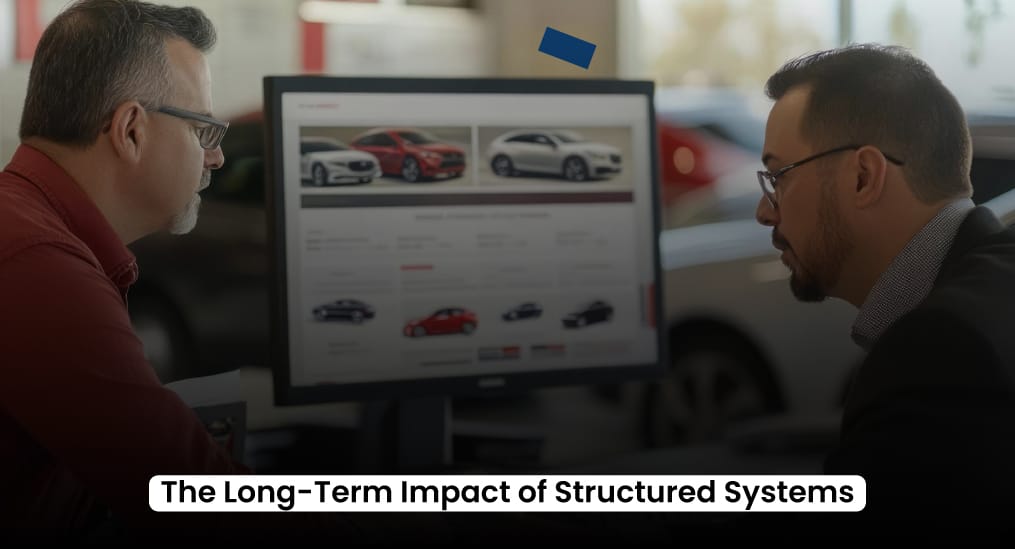
Automation is not something that just helps for a while. It is something that helps your business for a time.
Businesses that use systems, like automation, get some good advantages. These include:
- Conversion rates
- Reduced operational inefficiencies
- Predictable revenue streams
- Better customer experience
Over time, these advantages get even better.
Where Car Dealership Marketing Automation Fits in the Future?
The industry is moving toward systems that prioritize efficiency and conversion. Visibility alone is no longer enough.
Car dealership marketing automation plays a central role in this transition. It connects visibility with execution, ensuring that every opportunity is captured and converted.
Businesses that continue relying on manual processes and fragmented tools will struggle to compete. Those who adopt structured automation systems will operate with greater consistency and control.
What Should Dealerships Focus on Moving Forward?
The gap between visibility and conversion is where most dealerships lose revenue. Marketing efforts generate interest, but without systems, that interest rarely turns into bookings.
Automation addresses this gap by creating a structured, predictable process. It captures high-intent leads, manages interactions, and ensures consistent follow-through.
For car rental businesses, the focus should shift from isolated tactics to integrated systems. This shift determines whether marketing efforts produce temporary spikes or sustained growth. For a deeper understanding of how to consistently attract high-quality leads, explore 10 Proven Dealership Lead Generation Strategies to Boost Sales.


