

One uncomfortable truth behind catering lead generation is that most catering companies don’t actually have a lead problem. The problem they actually face is a retention problem.
Corporate clients do place repeat orders, just not with the same vendors, and if you’ve ever wondered why a one-off office lunch doesn’t turn into a long-term account, this article breaks down the real reasons and what consistently separates repeatable success from forgettable service.
This isn’t about trends or tactics for quick wins. It’s about understanding how corporate buyers think, how decisions are made inside US companies, and why most catering brands unknowingly disqualify themselves after the first order much like the real reason medical websites don’t convert patients when trust, clarity, and decision psychology are ignored.
The Corporate Catering Reality Most Companies Miss
Corporate catering services operate in a very different environment than weddings, parties, or social events. Orders are frequent, predictable, and budgeted, but only for vendors who prove they’re reliable.
Decision-makers are often:
- Office managers
- HR coordinators
- Executive assistants
- Procurement teams
They are risk-averse, busy, and judged internally on outcomes. That context changes everything.
One Order Does Not Equal Trust
Most corporate catering companies in the US believe that their first corporate order is a win, but in reality, it is a trial. Because the corporate buyers are silently evaluating:
- Was the delivery early or late?
- Did the food match expectations?
- Was communication proactive?
- Were there issues? And if so, how were they handled?
Failing even one of these quietly removes you from future consideration.
Why Catering Lead Generation Fails Without Retention Systems
Many catering companies invest time and money into lead generation but stop at acquisition. That’s where the leak begins.
If your corporate lead generation process ends after payment and delivery, you’ve already lost the repeat order. Corporate clients expect a vendor who remembers them, anticipates needs, and reduces friction over time the same disconnect that explains why car dealerships waste money on Google Ads when there’s no long-term strategy beyond the first conversion.
What Happens When you Don’t Follow up in a B2B Catering Sales?
One hack to get repeat corporate catering orders is to follow up with your client about the order, event, and services.
And if you fail to do so, here’s what typically happens:
- A company places a catering order for a meeting.
- The event goes “fine.”
- No follow-up happens.
- Next time, they Google again or use a different vendor.
They might have liked your services, but they might not remember you.
Inconsistent Service Experience Across Orders
Consistency matters more than creativity in B2B catering sales.
Corporate clients don’t want surprises. They want the same quality, the same portions, the same professionalism, every single time.
When can your client feel like your corporate catering services have inconsistent ambiguity:
- Different drivers handle deliveries differently
- Varying food presentation depending on the staff
- Inconsistent packaging or labeling
- Changing menu availability without notice
Poor Communication Can Affect Your B2B Catering Sales
Most corporate catering leads don’t expect a relationship, but they do expect clarity.
Poor communication is one of the fastest ways to lose repeat orders, even if the food is excellent.
Common Communication Gaps
- No confirmation or reminder before delivery
- No point of contact during the event
- No follow-up after the order
- No easy reordering process
When you automate your catering lead generation processes, you completely omit this problem and experience an enhanced customer experience.
No Post-Order Strategy Is Your Biggest Miss
The number one reason catering companies in the US never get repeat orders from corporate is simple: they don’t ask for them.
What a Smart Post-Order Flow Includes
- A brief thank-you message
- A simple feedback request
- A reminder that reordering is easy
- A note acknowledging the specific event or team
Brands that quietly implement Catering Marketing Automation are far more likely to stay top-of-mind without annoying their clients.
Treating Corporate Clients Like One-Off Customers
Corporate buyers think in terms of vendors, not transactions. If your brand experience feels generic, you become interchangeable.
What Corporate Clients Notice
- Do you remember their company name?
- Do you remember dietary preferences?
- Do you reference past orders?
- Do you anticipate recurring events?
Personalization doesn’t mean complexity. It means attention. If you implement and automate your catering marketing strategy, you give the impression to your corporate clients that their needs have your undivided attention. You’ve already won the battle.
How Pricing Impacts Repeat Orders?
Repeat orders die when pricing feels unpredictable. Corporate budgets are often approved in advance. If pricing changes without explanation, it creates internal friction for the buyer.
- Inconsistent quotes slow approvals
- Hidden fees create distrust
- Lack of standard packages increases decision fatigue
Clear, stable pricing builds confidence, even if it’s not the cheapest. They know in advance what they’re paying for, so they’re more likely to pay that amount the next time.
The Role of Local Trust in Corporate Catering
For catering companies in the US, especially in competitive metro areas, local credibility matters more than online visibility alone.
Corporate buyers prefer vendors who:
- Understand local logistics
- Know building access challenges
- Have experience with nearby offices
- Can respond quickly if something changes
This is where regional expertise quietly becomes a differentiator. Houston-based companies, for example, often face unique delivery timing, parking, and scale considerations that outsiders overlook.
Brands like KoretechX have observed that local relevance is what sustains long-term corporate relationships.
Why Traditional Marketing Alone Can’t Fix This?
A catering marketing strategy focused only on traffic and inquiries will always hit a ceiling.
Marketing brings attention. Systems keep accounts. To win your client every time, you need both growth and stability in your operations.
- Growth = new inquiries every month
- Stability = predictable repeat revenue
Most catering companies in the US chase the first and ignore the second.
High-Performing Catering Brands Think Differently
The 10% of companies that do get repeat corporate orders approach the business differently, with a focus on:
- Experience consistency
- Operational follow-through
- Relationship memory
- Process, not pressure
They don’t rely on constant promotions or discounts. They rely on trust. They build trust with their corporate clients that is based on effective, clear, and responsive communication.
The Long-Term Impact of Repeat Corporate Catering Orders
Lower Acquisition Costs
Repeat clients minimize the need for constant advertising, saving significant marketing expenses over time.
Faster Order Cycles
Strong relationships with repeat clients lead to quicker decision-making and more efficient ordering processes on their end.
Higher Lifetime Value
Loyal customers contribute more revenue throughout their relationship, enhancing the overall profitability of the catering business.
More Referrals Within Organizations
Satisfied office managers often recommend services to their peers, creating new business opportunities and partnerships.
Influence Across Departments
A pleased office manager can promote catering services to various departments, fostering long-term partnerships and increased orders.
What This Means for Your Corporate Catering Services
If repeat orders aren’t happening, it’s rarely about food quality alone.
It’s about:
- How reliable do you feel
- How easy you are to work with
- How well you remember past interactions
- How clearly you communicate
Fixing these doesn’t require a massive overhaul. It requires intentional design.
Retention Is the Real Growth Lever
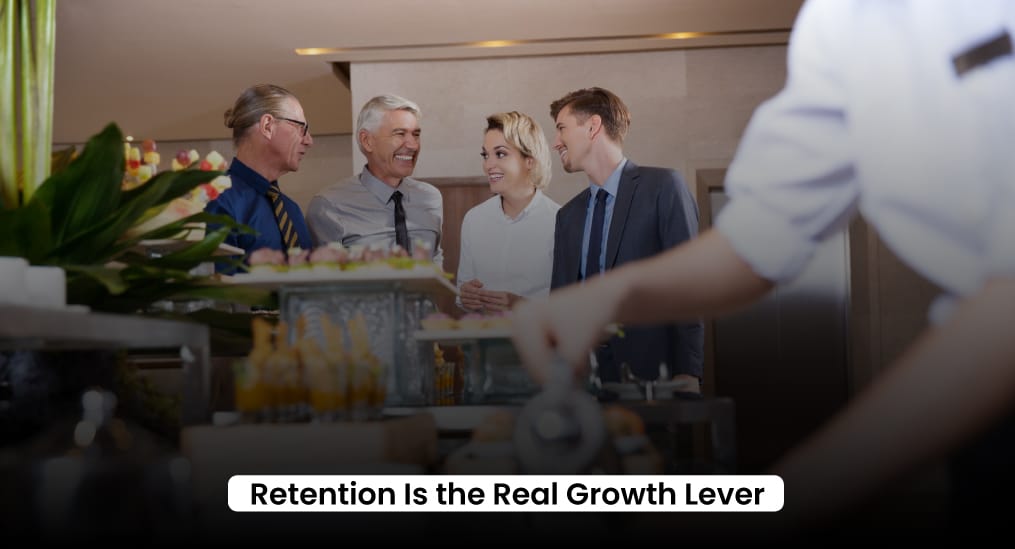
Most catering companies never get repeat corporate orders because they were never designed to.
Nowadays, catering lead generation is all about making the first one count enough to come back.
When your systems, communication, and experience align, repeat business becomes the default not an exception especially as the corporate catering market continues to expand. As highlighted in The Catering Boom: 7 Reasons Your Restaurant Can’t Afford to Miss Out.


