


E-commerce solutions of the modern age help businesses in structuring their operations and enhancing the customer experience at all levels of the purchasing process.
Customers today want to find products, choose, and make purchases without hassles, regardless of whether they are shopping in a local store or a nationally renowned brand.
And for many organizations, the challenge is establishing systems that, in fact, encourage consistent growth. Inventory must be kept in line. Customer information should be structured. Marketing campaigns must relate to the actual buying behaviour.
This is where the modern e-commerce solutions come in handy. Businesses are establishing digital infrastructure, linking storefronts, marketing channels, and customer management in a single coordinated system instead of regarding online sales as a different activity.
What Are E-commerce Solutions in the Modern Business Landscape?
It is best to start by defining what is e-commerce in the present day before delving into strategy. It is still believed by many that it is just a matter of selling products on a website. As a matter of fact, it has grown into a much larger ecosystem.
An e-commerce company today incorporates various elements that operate in the background. Product catalogues should remain up to date across platforms. Orders activate inventory changes. Marketing campaigns are a response to customer behaviour. Transactional systems facilitate safe payment and delivery-tracking tools.
These processes rely on integrated Digital Solutions that maintain the flow of information between systems. Because when businesses use tools that are not connected, minor operational issues start emerging. Orders may be delayed, there is an inconsistency in customer communication, and marketing campaigns do not have the correct data.
Why E-commerce Solutions Are Growing Rapidly in Canada
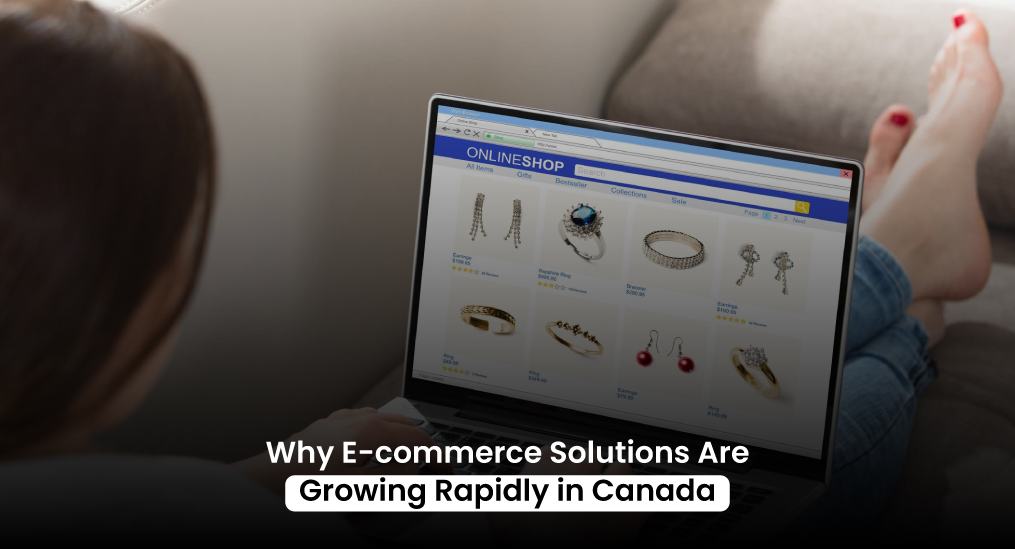
The digital purchasing behaviour has evolved rapidly in Canada. Consumers feel free to shop in both big markets and small independent stores. This has presented new business opportunities to those companies that wish to access customers outside their locality.
At the same time, competition has increased. Many companies that once relied only on physical retail are now investing in online channels.
A successful commerce business in Canada, therefore, needs more than a simple website with a product list. They also require:
Search Visibility with AI SEO
Online stores must appear in search results when customers are actively looking for products. Tools that support AI SEO analyze search behaviour and help businesses optimize product pages, descriptions, and category structures.
Smart Website Performance
Stores that load slowly or feel difficult to navigate often lose potential buyers before they reach checkout. Many companies are moving toward Smart Websites that adapt to device type, browsing patterns, and user behaviour. These sites respond quickly and guide visitors through the purchase journey more intuitively.
Digital Marketing Integration
Online advertising, email campaigns, and social media promotions work best when integrated with structured digital marketing solutions. When campaign data feeds directly into sales analytics, businesses gain a clearer understanding of which efforts generate real revenue.
All of these elements together create an environment where online stores can operate efficiently without constant manual intervention.
Online stores must load quickly, handle mobile traffic efficiently, and guide visitors toward purchases. Platforms that integrate with a digital agency or internal technology teams tend to adapt faster to these expectations. Updates to product pages, promotions, and checkout processes can happen quickly when systems are designed with flexibility in mind.
How Branding Improves E-commerce Solutions and Customer Trust
Online selling cannot be successful with only technology. Brand identity and trust still matter a lot to the customers. Leveraging professional Branding Services, a store that speaks well, is visually consistent, and offers trustworthy services is likely to establish better relationships with buyers.
Customers can also perceive a store based on colours, messaging, and product presentation. As long as the branding is the same throughout the site, the marketing resources and the social platforms, shoppers will be more assured and make a purchase.
Structured SEO strategies also determine search performance because they aid product pages to be listed in relevant searches. Clear navigation, well-written descriptions, and category structure make it easier to navigate and comprehend the store for both customers and search engines.
Marketing efforts expand further when businesses combine content, advertising, and customer engagement through integrated Digital Marketing strategies. Instead of isolated campaigns, these efforts create ongoing relationships with customers who may return for repeat purchases.
Online retail works best when the technology supporting the store is aligned with how customers actually shop and interact with brands.
How CRM Software Supports E-commerce Solutions
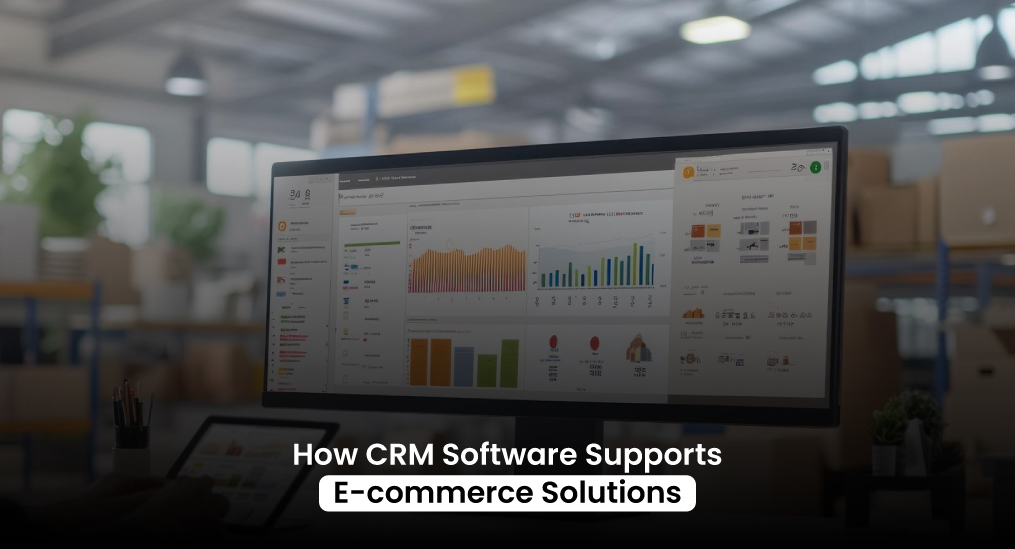
One of the most valuable resources in an online business is customer information. Purchase history, browsing habits, and engagement behaviour are all useful in helping a company know how to optimize their sales process.
A practical question many organizations start to ask when their store starts to expand is: what is crm software, and how can it be used to manage customer relationships?
An effective CRM system provides businesses with an opportunity to monitor the interactions with customers in several touchpoints. It documents the sales, inquiries, and marketing activities. This information can be transmitted to sales teams, marketing departments, and customer service representatives when combined with CRM and Mobile App systems.
Such processes enhance customer experience as well as boost conversion rates. Companies that store customer information efficiently can make better pricing, promotion, and product development decisions.
Multi-Channel E-commerce Solutions for Selling on Amazon and Marketplaces
Online stores rarely operate in isolation today. Many businesses use modern e-commerce services to expand their reach by listing products on established marketplaces in addition to their own website.
Platforms that support Amazon Services allow companies to manage inventory, product listings, and order processing across different channels without duplicating work. When systems remain connected, stock levels stay accurate, and customers receive consistent information regardless of where they make a purchase.
Building Scalable E-commerce Solutions for Long-Term Growth

The most successful online retailers treat technology as a long-term investment rather than a short-term experiment. Instead of focusing only on launching a store quickly, they think about how the platform will support future growth.
Reliable e-commerce solutions often include automation tools that simplify everyday tasks. Inventory updates, shipping notifications, and customer communications can happen automatically once orders are placed. This reduces manual work and allows teams to focus on strategy instead of routine operations.
Scalability also matters when businesses introduce new products or expand into additional markets. Systems built with modular architecture can handle increased traffic, larger product catalogues, and more complex customer interactions without requiring a complete redesign.
Many companies begin with a small online catalogue and gradually expand into larger operations. A structured digital foundation makes this growth far easier to manage.
For Canadian businesses looking to strengthen their online presence, the goal is not simply to launch an online store. The real opportunity lies in creating systems that support efficient operations, meaningful customer engagement, and sustainable sales growth. Businesses exploring the right platforms can also review resources like Best E-Commerce Platforms in Canada to better understand which solutions support long-term digital growth.


